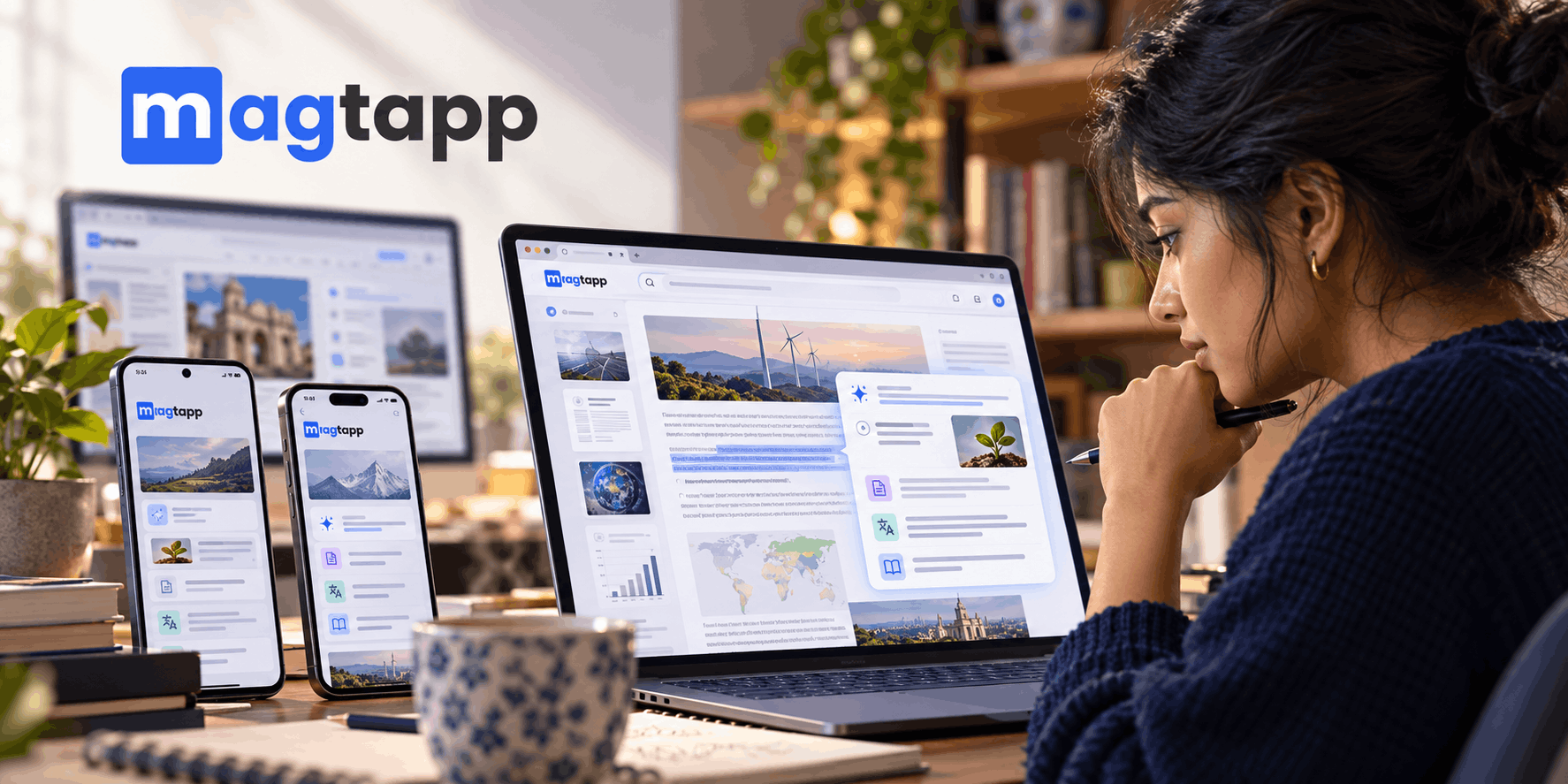
Indian technology company MagTapp says it has crossed 6 million downloads as it rebuilds its browser around artificial intelligence and expands its latest product to iOS. The company is repositioning itself from a visual-learning browser into what it calls an AI-native browsing platform aimed at users who want help understanding information while they search, read and learn online. The download figure and related usage metrics were disclosed by MagTapp in a company-issued press release.
The new architecture integrates Alpie, a family of AI models developed by technology partner 169Pi, directly into the browsing experience. Rather than adding a standalone chatbot beside the browser, MagTapp says AI now sits underneath activities such as searching, reading documents, translating content and explaining difficult concepts. Its current iOS listing describes features including AI Search, visual meanings, document reading and multilingual browsing.
MagTapp says its existing product has accumulated more than 143,000 ratings and reviews, a 4.2 Play Store rating and users across 106 countries. Google Play currently lists MagTapp as an “AI Visual Browser,” while the newly available iPhone version positions the product as an AI-powered visual browser and productivity platform.
The company is also building on its participation in India’s Indian Web Browser Development Challenge, a government-backed programme designed to encourage secure, India-focused browsers with features such as support for Indian languages and indigenous digital-signing infrastructure. MagTapp says it was among the top eight teams in that challenge. MeitY has separately confirmed the programme’s broader objective of developing indigenous browsers across desktop and mobile platforms.
The bigger test now is whether MagTapp can convert its existing Android-era user base into sustained usage of the rebuilt AI product. The company plans additional AI capabilities, a larger app version, a desktop browser and a connected cross-device experience. For MagTapp, the strategy is increasingly clear: compete not simply as another browser, but as a layer that helps users interpret and understand information while they browse.
Filed by
Startup Unplugged