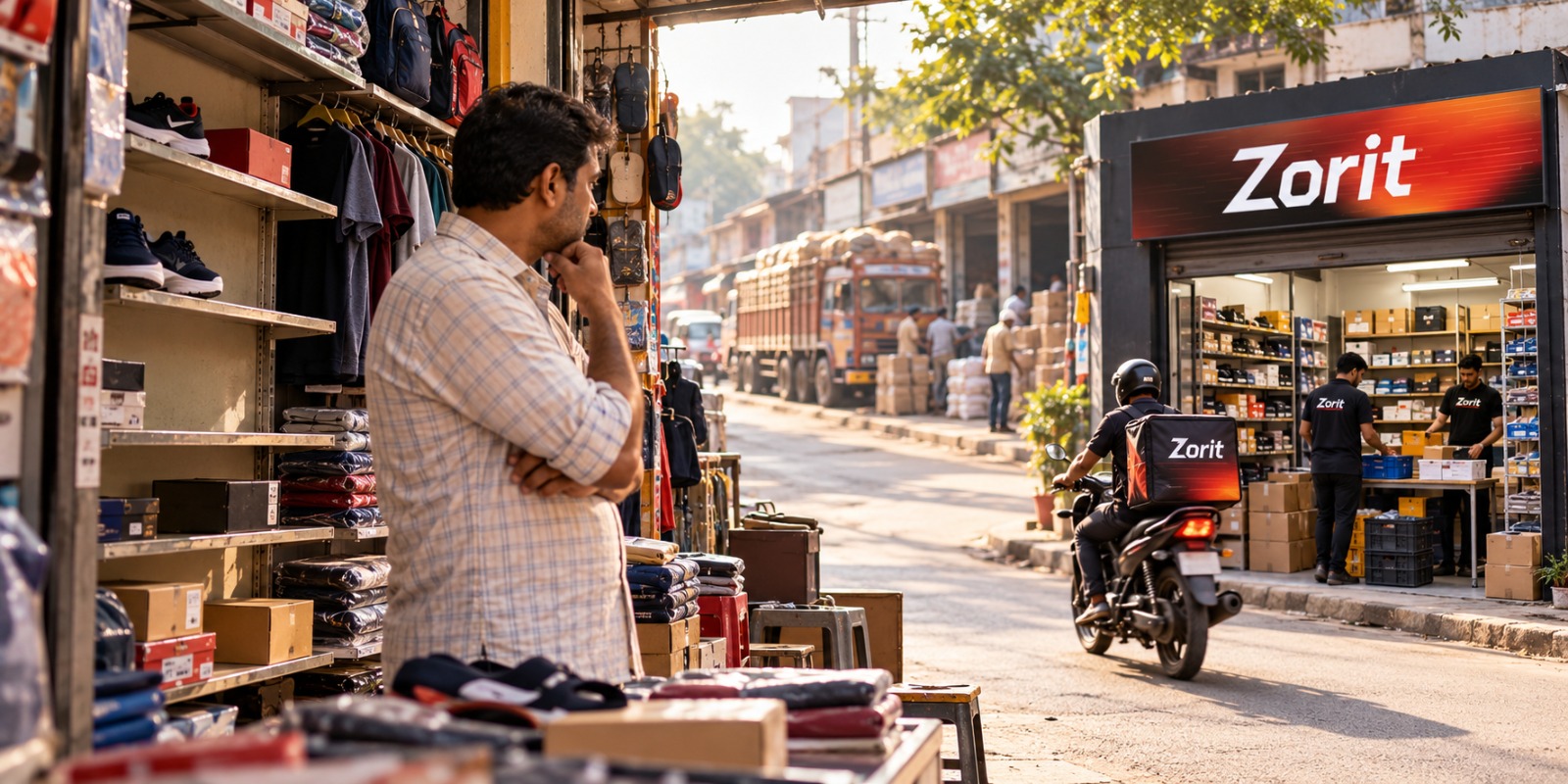
Bijnis spent years building a digital marketplace between manufacturers and retailers. Now the company is leaving that model — and its old name — behind. Rebranded as Zorit, the Delhi- based startup has raised ₹27 crore to deepen an inventory-led quick-commerce model built around faster replenishment for offline retailers.
The round was led by Sparrow Capital, with participation from existing investors Info Edge and WaterBridge Ventures, alongside Better Capital, employees and angel investors including Anupam Mittal, Shiprocket’s founders, Xpressbees executive Mohit Sardana and SoftBank’s Sarthak Misra. The fresh capital will go toward strengthening quick-commerce infrastructure, expanding assortment and increasing retailer engagement.
Founded in 2015 by Siddharth Vij, Chaitanya Rathi, Siddharth Rastogi and Sachin Chauhan, the company originally connected factories with retailers through an online B2B marketplace. By late 2024, it had shifted toward stocking goods inside local dark stores, allowing nearby shops to replenish inventory much faster.
Zorit says retailers can now receive products in as little as 60 minutes, compared with seven- to-eight-day cycles under its previous online model and roughly 24–48 hours through many local wholesalers. It currently operates 12 dark stores across 12 cities and reports annualised sales of around ₹120 crore. Nearly half of those stores have reached break-even, including the cost of liquidating unsold inventory, according to the company.
The pivot comes after a difficult period. In 2023, Info Edge wrote off its entire ₹76.6 crore investment in Bijnis, citing continued cash burn, limited cash availability and uncertainty around future fundraising. Since moving to quick commerce, Zorit says monthly ordering frequency has increased fivefold and retailer retention beyond six months has improved fourfold. Around 60% of its retailers had never previously used an online B2B platform.
Zorit’s comeback will ultimately depend on whether speed can improve retail economics without recreating the inventory problems that hurt many commerce businesses before it. The rebrand is cosmetic; the real change is operational — moving inventory closer to the shop before the retailer even needs it.
Filed by
Startup Unplugged