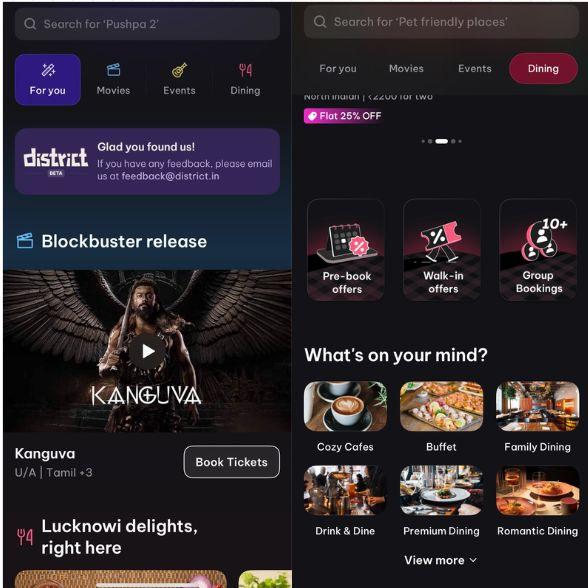
Zomato was building District as a separate consumer brand for dining, entertainment and ticketing, seeking to make its going-out business the company’s third large business after food delivery and quick commerce.
The strategy marked a different approach from Swiggy, which was pursuing an integrated app for multiple consumer services. Zomato instead continued to develop separate brands and apps around individual business verticals, with District designed to bring together several going-out services.
Zomato Chief Executive Officer Deepinder Goyal said the company saw an opportunity to build a one-stop destination for customers going out. The planned District app was to include dining out, movies, sports ticketing, live performances, shopping and staycations.
The move followed Zomato’s expansion into entertainment ticketing through its agreement to acquire Paytm’s entertainment ticketing business. Paytm said on August 21 that it had agreed to sell its movie, sports and events ticketing operations to Zomato for Rs 2,048 crore in cash.
The transaction covered Paytm’s subsidiaries Orbgen Technologies and Wasteland Entertainment, which operated the TicketNew and Insider platforms respectively. Paytm said the deal also involved about 280 employees from its entertainment ticketing business.
Zomato’s going-out business had already included restaurant table reservations and selected live-event ticketing. The company was looking to use District to combine those existing services with the acquired entertainment ticketing operations and broaden its presence in the market.
The approach reflected Goyal’s preference for building multiple consumer-facing brands rather than putting every service into a single super app. Zomato had previously separated its food delivery and quick-commerce businesses through Zomato and Blinkit, while District was intended to become the dedicated brand for going-out services.
The company also saw the separate brand as a way to build customer loyalty around going-out activities. Goyal said a new brand could help customers associate the service with going-out use cases and support a loyalty programme aimed at improving customer retention.
The market opportunity was already sizeable. Zomato’s FY24 going-out business recorded a gross order value of Rs 3,225 crore, up 136% from the previous year, while Paytm Insider recorded a gross order value of Rs 2,000 crore during the same period, according to Business Standard.
The acquisition also gave Zomato access to an established entertainment-ticketing operation rather than building every category from scratch. Paytm said its combined entertainment ticketing business generated Rs 297 crore in revenue and Rs 29 crore in adjusted EBITDA in FY24.
The transaction was scheduled to be followed by the integration of the acquired businesses into District. Zomato later disclosed that it completed the acquisition of Orbgen Technologies and Wasteland Entertainment on August 27, 2024, with the businesses becoming wholly owned subsidiaries
Filed by
Startup Unplugged