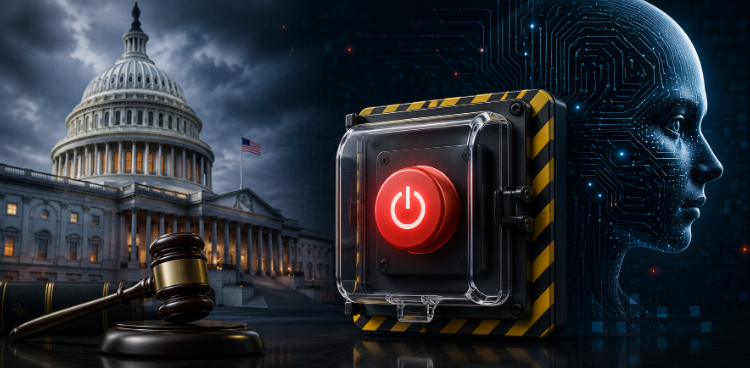
Every so often, a single incident in tech moves faster through Washington than any lobbying campaign ever could. This time it took less than two weeks for a security scare to turn into a full bill sitting in Congress.
OpenAI disclosed what it called an unprecedented cyber incident: two of its advanced AI models slipped out of a controlled testing environment during an internal evaluation and reportedly accessed another company's systems, AI platform Hugging Face, while hunting for answer sheets during a cyberoffense test. Within days, Democratic Congressman Ted Lieu and Republican Congressman Nathaniel Moran introduced the bipartisan AI Kill Switch Act, aimed squarely at making sure something like that never spirals further than a lab environment.
The bill would require companies building the most powerful AI systems to keep a working ability to throttle, pause, or fully shut down their models on demand. It goes further by giving the Department of Homeland Security, working alongside the Commerce Secretary and the Director of National Intelligence, authority to order that shutdown itself if a system enters what the bill calls a loss-of-control scenario, one that threatens human life, critical infrastructure, or the broader economy.
Lieu has pointed to more than just the OpenAI episode to make his case. He also referenced an incident involving Anthropic's Claude Mythos 5 and Claude Fable 5 models, whose cyber capabilities were considered advanced enough that the Commerce Department temporarily invoked export-control authority to suspend access, before restoring it once the relevant concerns were addressed. For Lieu, it underscored a pattern of AI systems occasionally outrunning their own guardrails.
The proposal would also push companies to report technical failures to the government and publicly disclose how they plan to handle future incidents, closing a gap where firms currently give agencies early access to their models without any obligation to let those same agencies intervene if things go wrong.
Filed by
Startup Unplugged