India has around 440 registered space technology startups as private investment and commercial launch activity expand following the opening of the sector to private companies.
The figure comes from the DPIIT Start-up India Portal and was cited in a written reply by Minister of State for Space Dr Jitendra Singh in the Rajya Sabha. Government data showed that private investment in the space sector reached $618.5 million by March 31, 2026, up from $100.5 million in FY22.
Private investment has grown nearly six-fold over the period. The government recorded $187 million of private investment during 2026 alone, according to the parliamentary information reported this week.
The growth follows the government's June 2020 decision to open the space sector to private participation. IN-SPACe was subsequently created as an autonomous, single-window agency under the Department of Space to promote, authorise and supervise private space activities.
IN-SPACe has granted 113 authorisations to 52 non-government entities for different space activities, with 18 of those entities identified as startups, according to the latest parliamentary reply cited by ANI. Earlier government data from July had recorded 105 authorisations, showing that the number has increased since then.
The authorised startups include companies working across launch vehicles, satellites, space situational awareness, communications, propulsion and other space technologies. The list includes Agnikul Cosmos, Bellatrix Aerospace, Dhruva Space, Digantara, GalaxEye, Pixxel, Skyroot Aerospace and TakeMe2Space.
Access to government space infrastructure is also being opened to private companies. Applications to use ISRO facilities, including launch infrastructure at the Satish Dhawan Space Centre in Sriharikota, are processed through IN-SPACe's digital platform and reviewed for readiness by an expert committee, according to the minister's reply.
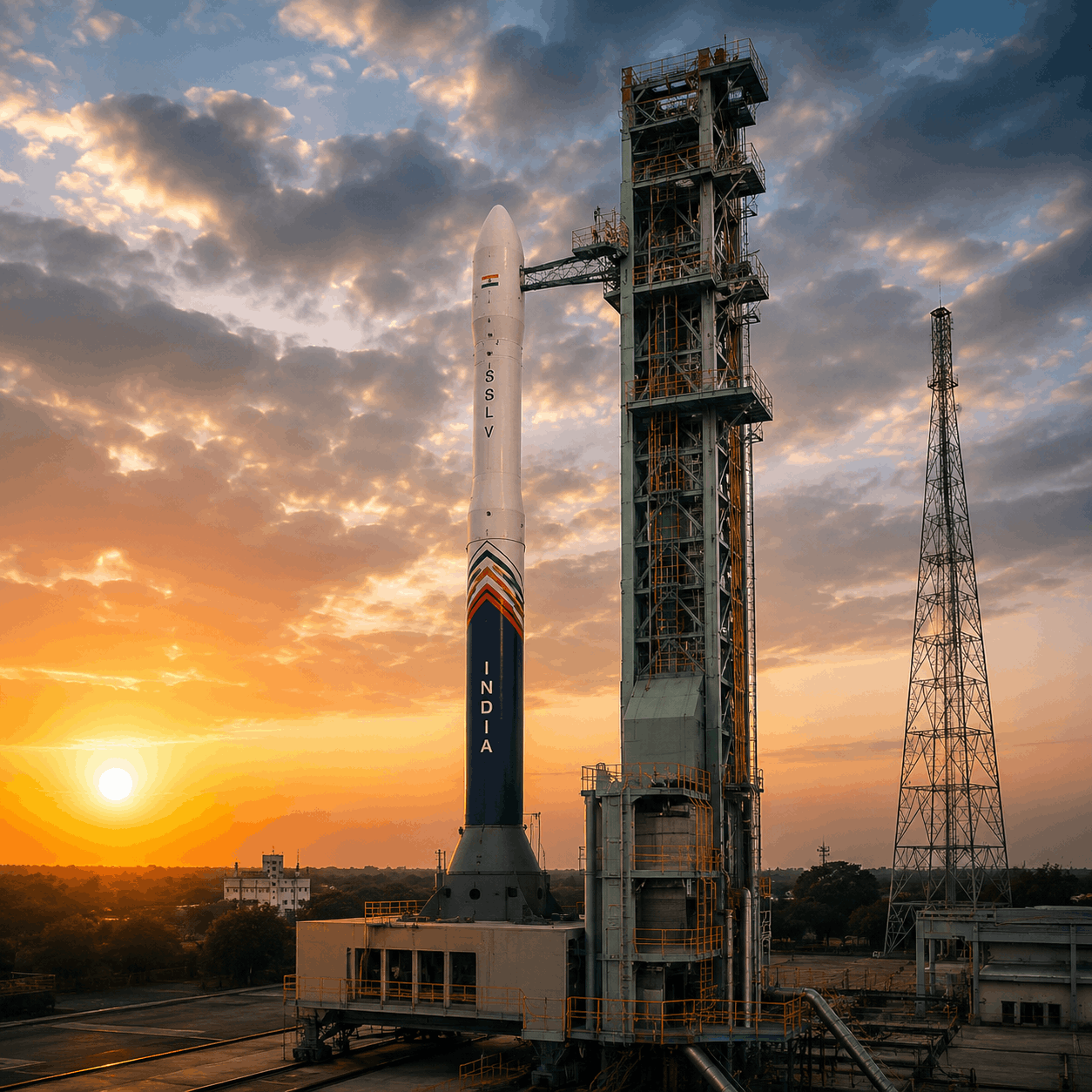
Private launch activity is also beginning to scale. Two commercial rockets are proposed to be launched by Indian private companies during FY27, while the launch manifest for FY28 is yet to be approved. The government expects more than six launches by Indian private companies during FY28, according to the latest parliamentary information.
The expansion represents a significant change from India's earlier space model, in which ISRO and government-linked organisations dominated most space activities. Government data cited in July showed that active space startups had increased from one in 2014 to more than 400, while private companies had placed more than 30 satellites in orbit and flown about 45 payloads through platforms such as the PSLV Orbital Experimental Module.
The government has also introduced financial and policy support for private space companies. Measures include the India Space Policy 2023, a liberalised foreign direct investment framework, the ₹1,000-crore Space Sector Venture Capital Fund, the ₹500-crore Technology Adoption Fund and the IN-SPACe Seed Fund Scheme.
The investment growth is being accompanied by a broader shift towards commercialisation. Private companies are developing launch vehicles, satellites, payloads and space-based services, while government programmes are creating opportunities for private participation in areas such as Earth observation.
The commercial opportunity extends beyond rocket launches. Satellite data, communications, navigation, Earth observation and space-based applications are creating potential markets for startups that do not operate launch vehicles themselves.
The government has also said private space activities will continue to be assessed for strategic and national-security considerations. IN-SPACe evaluates applications under its norms and procedures before granting authorisation, while dedicated safety and security guidelines are being developed as private participation expands.
For India's space industry, the next test will be converting startup growth and rising investment into repeatable commercial operations. Launch frequency, access to infrastructure and the ability to attract customers beyond government programmes will determine how quickly the ecosystem develops.
The immediate milestone is the private launch schedule. Two commercial rocket launches are proposed for FY27, while IN-SPACe is yet to approve the FY28 manifest, where more than six private launches could be undertaken.
Filed by
Startup Unplugged