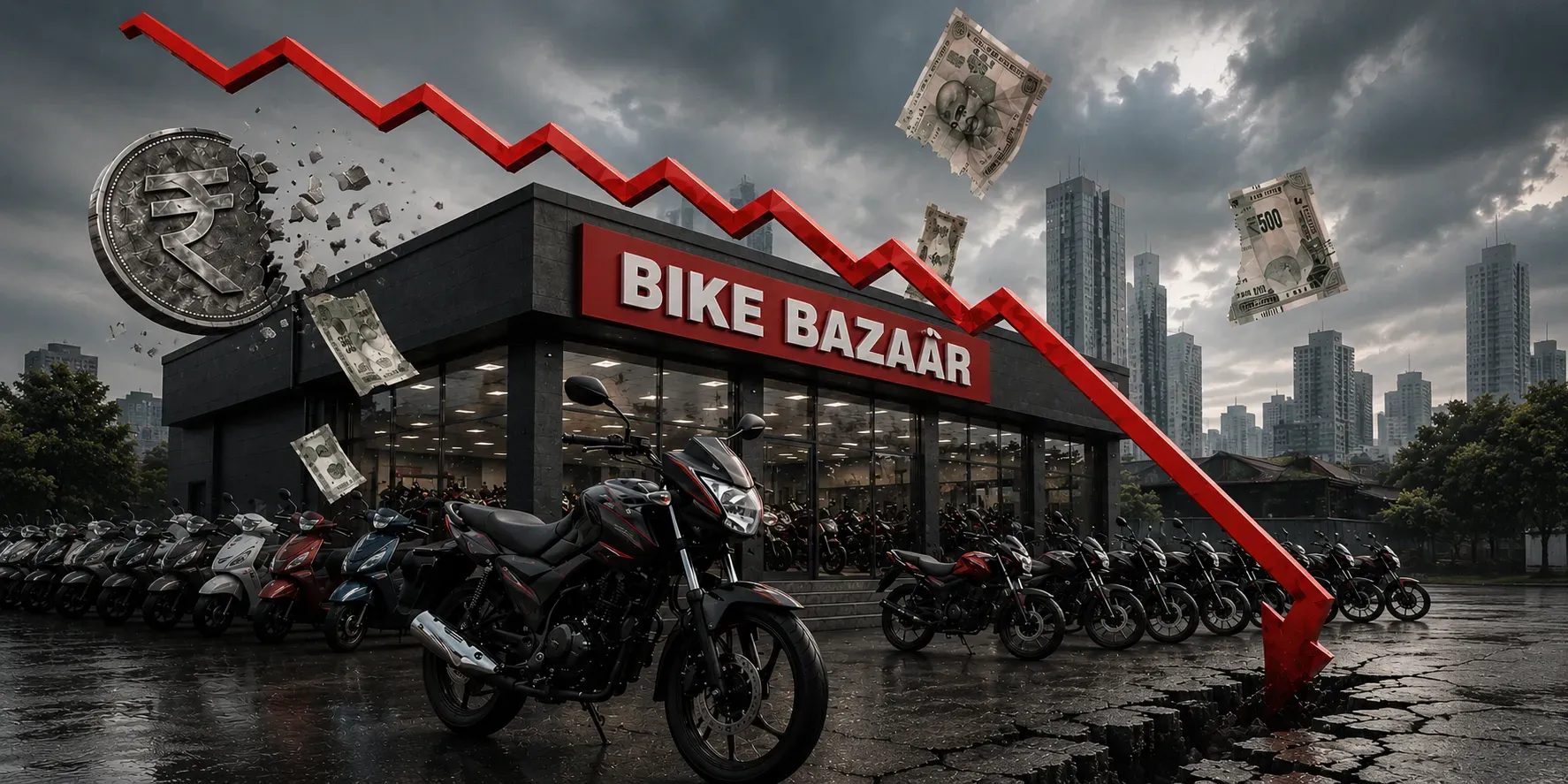
Bike Bazaar's lending business has come under pressure after rising stressed assets, shrinking liquidity, and weaker loan collections pushed the fintech into a credit crisis, forcing it to halt fresh lending.
Not long ago, Bike Bazaar was seen as one of India's promising fintech players, helping thousands of customers finance two-wheelers across the country. Its growth story reflected the optimism surrounding digital lending. Today, however, the company finds itself navigating one of its toughest phases yet.
Bike Bazaar has paused fresh loan disbursements after a sharp deterioration in its loan portfolio and mounting liquidity pressure. The decision comes as the company works to stabilise its financial position amid rising stressed assets and weakening repayment trends.
The numbers highlight how quickly the situation has changed. The company's loan book has contracted significantly over the past year, while its financial performance has swung from profitability to losses. A growing share of its loan portfolio has also come under stress, reflecting increasing repayment challenges among borrowers. These developments have added pressure on both liquidity and future lending operations.
To improve its position, Bike Bazaar has taken multiple corrective steps, including restructuring parts of its business, selling stressed assets, and raising additional funds through debt instruments. The company is also exploring strategic investment opportunities as it looks to strengthen its balance sheet and revive growth.
The episode serves as a reminder that in lending, rapid expansion alone is never enough. Sustainable growth depends on disciplined risk management, healthy collections, and maintaining adequate liquidity during changing market conditions.
Despite the current challenges, Bike Bazaar's journey is still unfolding. The company's ability to restore investor confidence, improve asset quality, and restart lending will determine whether this becomes a temporary setback or a defining turning point.
For India's fintech ecosystem, the story carries a broader lesson. As competition intensifies, startups are increasingly being judged not just by how fast they grow, but by how well they manage risk when market conditions become difficult.
Filed by
Startup Unplugged