A delivery rider gets paid for carrying an order — not for the kilometres spent searching for the next one. Pune-based Dispatch Network has raised ₹5 crore in pre-seed funding to attack that gap by sequencing orders across multiple delivery platforms instead of treating every job as an isolated trip.
The round was led by Antler India, with participation from angel investors Krishi Fagwani, Yashin Mahadevia and Parth Modwadhia. Dispatch plans to use the capital primarily to expand the AI team developing its proprietary Large Logistics Spatio-Temporal Model, or LLSTM.
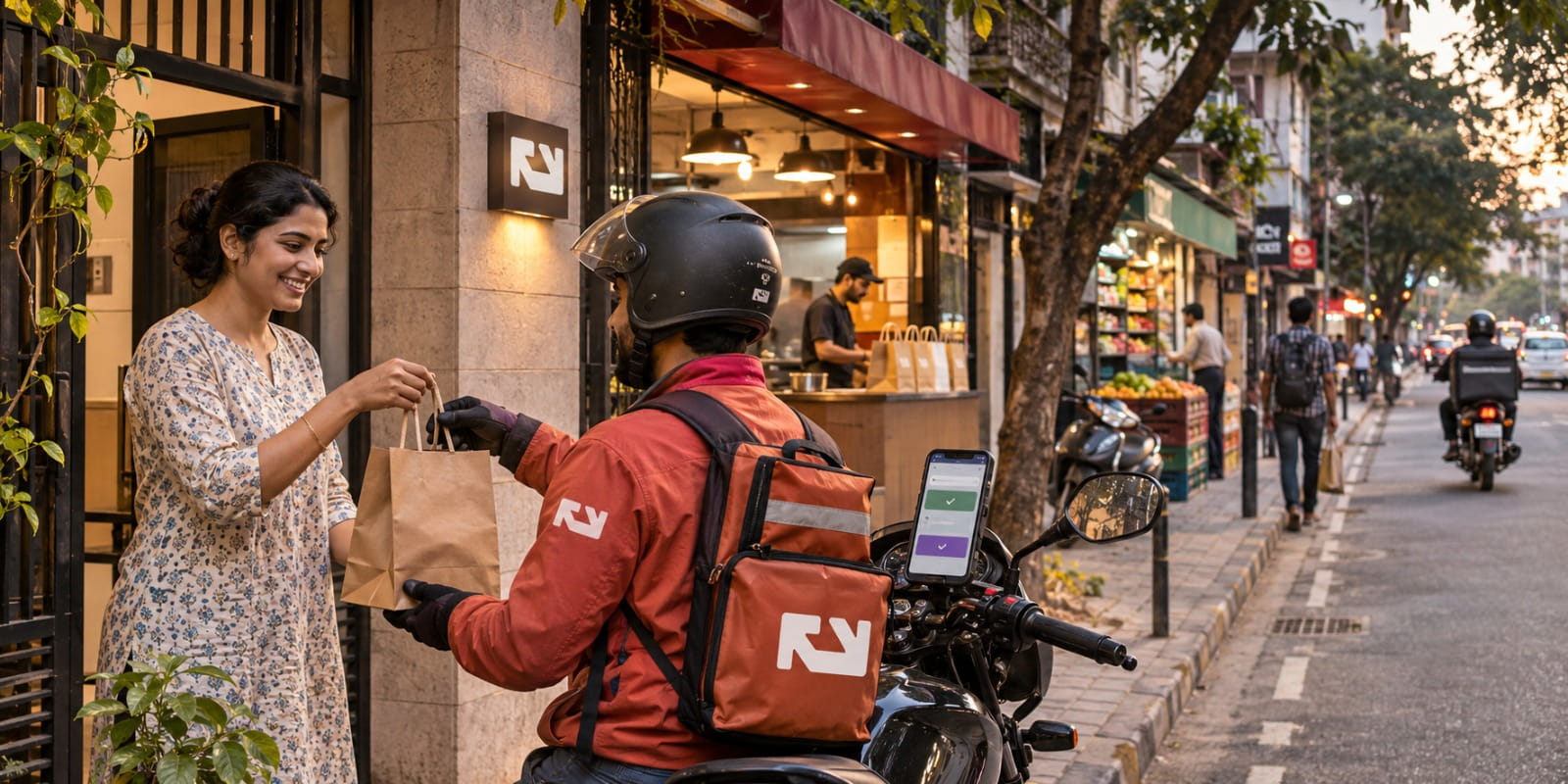
Led by Rajit Arya and Navneeth Kannan, Dispatch runs its own rider network for food-delivery and quick-commerce orders. Instead of allowing riders to independently pick each next job, its system decides which rider should take an order and where that rider should position themselves afterward. The model is designed around a minute-by-minute view of city demand rather than a fixed set of manually written dispatch rules.
The problem is significant. Dispatch says riders can travel up to 50% of their kilometres without an active order, leaving them to absorb fuel and vehicle costs without earning on that distance. The company claims its model has reduced empty kilometres by roughly two-thirds and that riders on its network earn around 55% more per month than the industry average. These are company-reported figures.
Dispatch went live in Pune in June 2026 and says it has since completed 100,000+ deliveries. Monthly volume climbed from 3,014 orders in June to 55,000 in October, while the network currently handles around 3,500 deliveries per day. It serves orders from platforms including Zomato, Swiggy, Zepto, Instamart and BigBasket, alongside restaurants and stores connected through APIs and ONDC.
Mumbai is expected to become its second city in November, while Dispatch is targeting 50,000 daily orders across five cities. The larger test is whether better sequencing can turn the most wasteful part of last-mile delivery — the empty ride between jobs — into productive time without simply pushing riders to work faster.
Filed by
Startup Unplugged