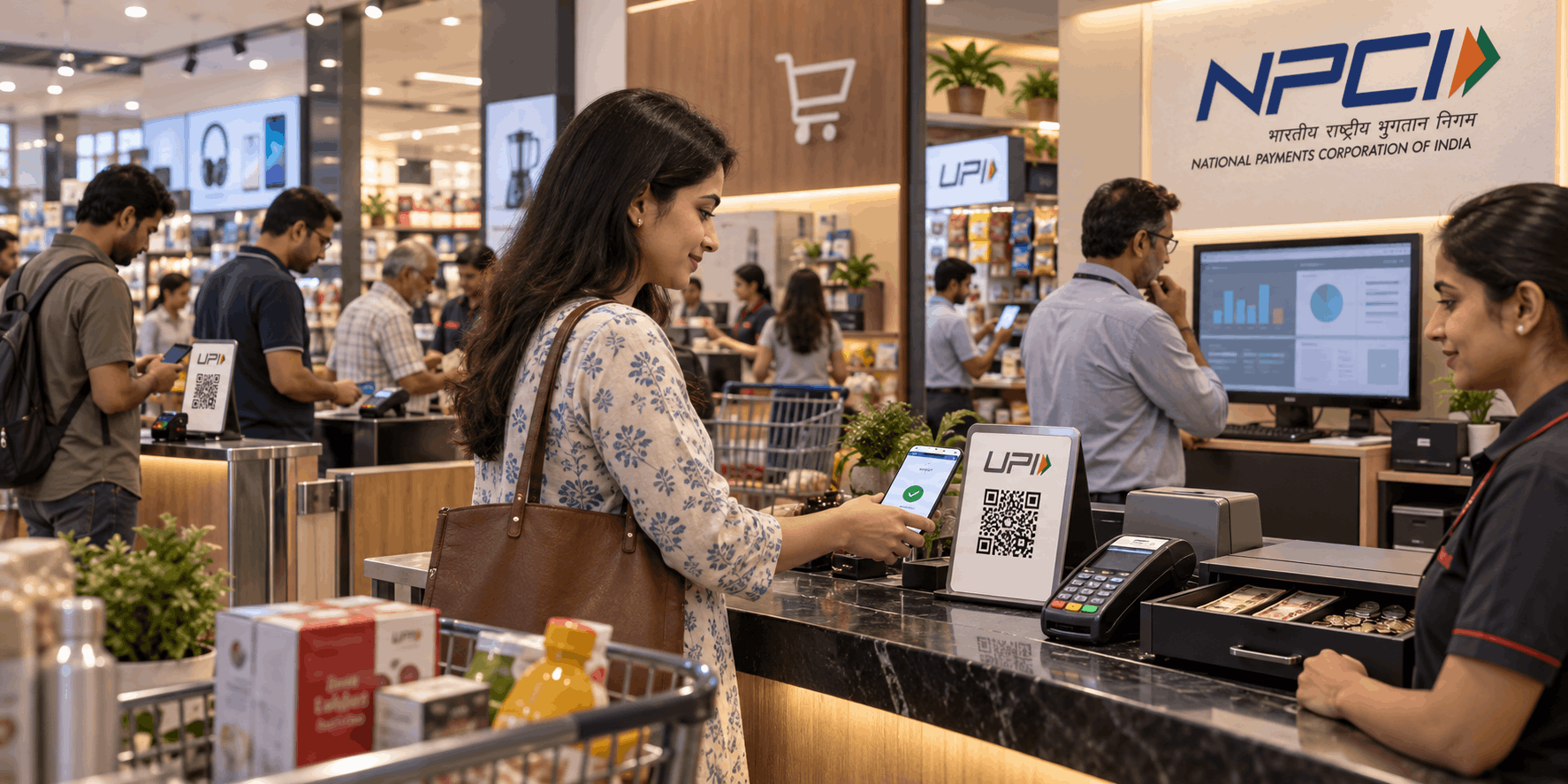
India’s UPI ecosystem is entering a new phase after years in which payment costs were largely invisible to users and merchants. From October 15, a 0.4% Merchant Discount Rate will apply to specified person-to-merchant transactions above ₹2,000, capped at ₹300 for transactions of ₹75,000 and above. Person-to-person transfers, smaller payments and qualifying small merchants remain outside the charge.
The change comes at enormous scale. UPI processed 24.51 billion transactions worth ₹29.82 lakh crore in August, while the government says roughly 96% of merchant transactions will remain unaffected by the new framework. MDR will be shared across participants including banks, payment service providers and UPI apps rather than being collected as a tax by the government or NPCI.
Yet even a relatively small fee is drawing concern from some larger merchants. Inc42 reported pushback from FMCG distributors, retailers and fuel dealers, with some businesses arguing that repeated MDR charges could pressure already thin margins. Fuel dealers in parts of Maharashtra have sought exemptions, while some merchants have considered limiting higher- value UPI acceptance.
For the payments industry, however, MDR creates a new recurring revenue pool. Brokerage estimates cited by Inc42 put the annual opportunity at roughly ₹15,000 crore to ₹20,600 crore, with banks expected to receive the largest share and payment apps and aggregators also benefiting. These are analyst estimates rather than guaranteed revenues and will depend on transaction mix and implementation.
The bigger question is whether merchant behaviour changes. Card payments and cash already carry their own costs, but UPI’s simplicity helped make QR payments nearly universal. If merchants absorb the new fee, consumers may notice little difference. If acceptance patterns change or costs indirectly influence pricing, some higher-value transactions could migrate toward cards, cash or other payment methods. UPI’s next test is therefore balancing sustainable infrastructure economics with the frictionless experience that drove its extraordinary adoption.
Filed by
Startup Unplugged
%20(1)%20(1).png)