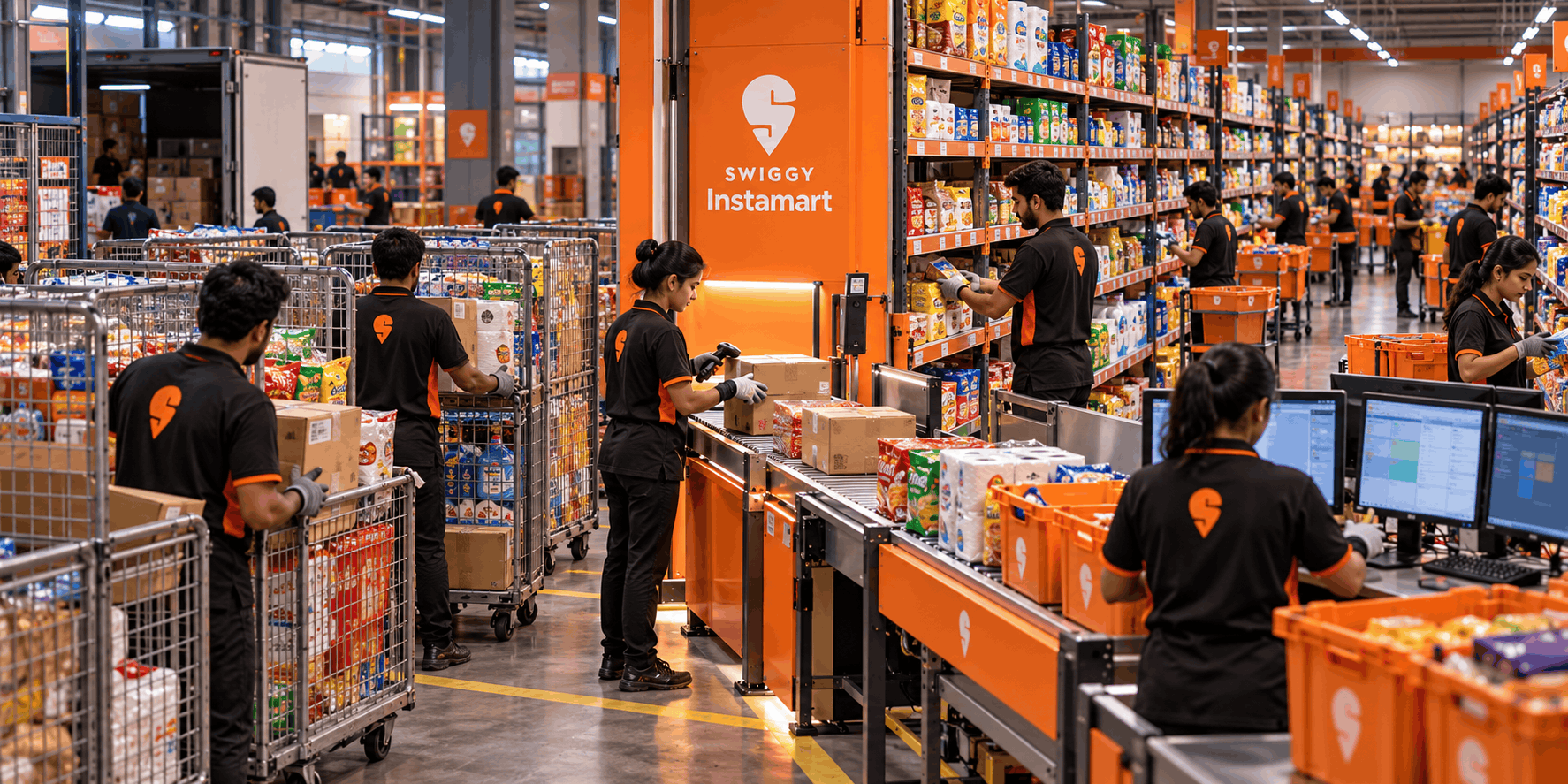
Swiggy is preparing a fundamental change inside Instamart’s dark stores. Instead of operatingb mainly as a marketplace where seller entities own the products, the quick-commerce business will begin buying and holding inventory itself from around mid-Q3 FY27.
The transition is expected to take two to three quarters to complete. Once fully rolled out, Swiggy estimates the inventory-led model could improve Instamart’s contribution margin by around 80 basis points while shortening its working-capital cycle by eight to 10 days. It should also give the company more direct control over assortment, pricing, availability and everyday store operations.
That potential margin gain matters because Instamart’s economics weakened in the September quarter. Its contribution margin fell to -1.0% of GOV, compared with -0.2% in Q1 FY27, while adjusted EBITDA loss widened to ₹895 crore. Swiggy attributed part of the pressure to continued spending on customer acquisition, pricing and network expansion.
The operating footprint, however, continues to grow. Instamart ended September with 1,240 dark stores across 133 cities after adding 69 stores during the quarter. Orders increased 29% year-on-year to 130.3 million, while average monthly transacting users reached 14.8 million.
The shift became possible after changes to Swiggy’s ownership structure. Domestic ownership crossed 50% in July, and shareholders subsequently approved a lower foreign-shareholding ceiling, helping clear the path toward a first-party inventory model. Swiggy had already indicated earlier that this ownership change was intended to enable the transition.
Owning inventory will not automatically make Instamart profitable. But it changes one important lever: Swiggy will increasingly control not just the app and delivery network, but also what sits on the shelf, how much is stocked and how it is priced.
Filed by
Startup Unplugged