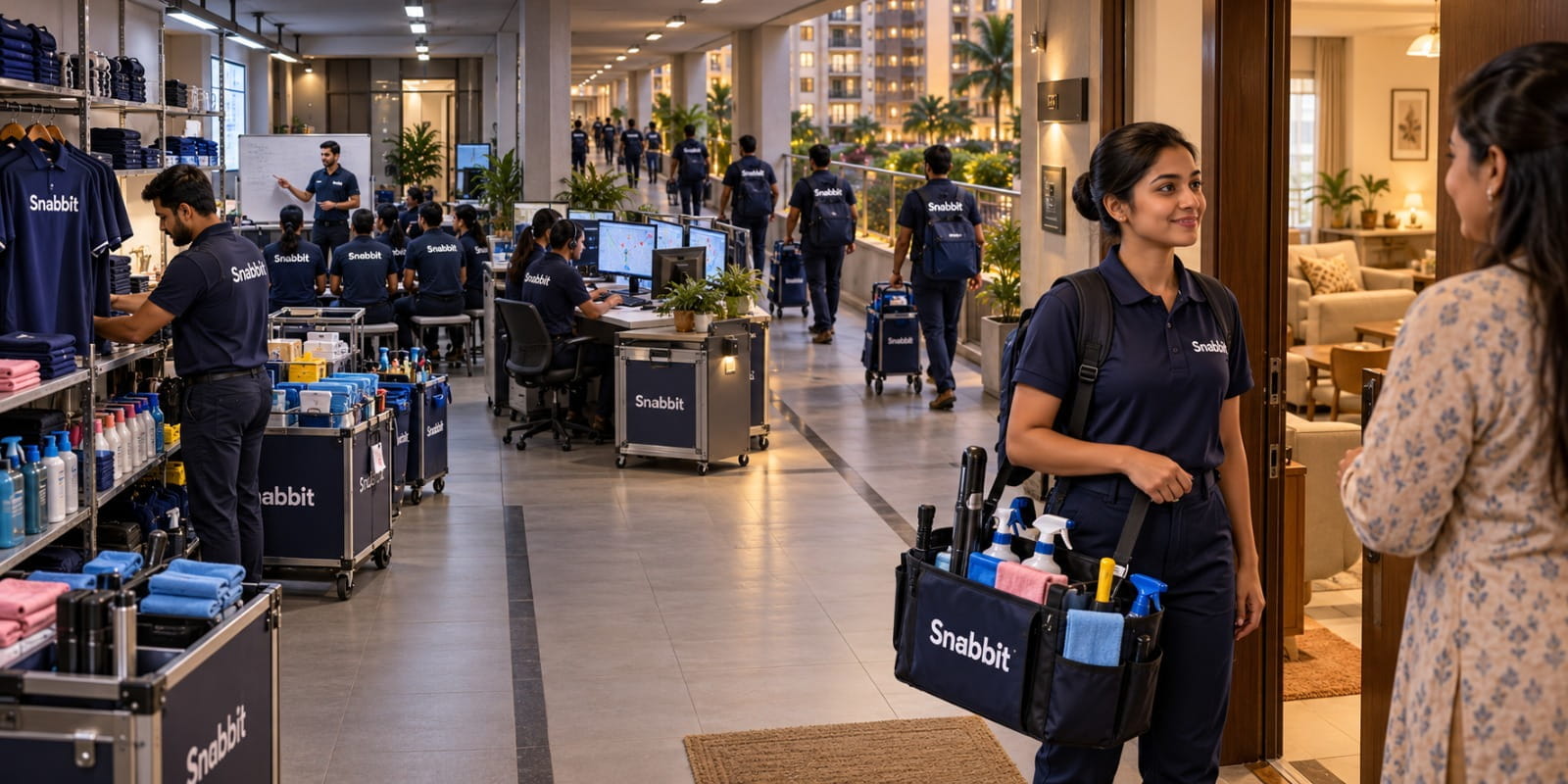
Snabbit spent heavily to turn instant household help into a high-frequency service in FY26. The quick home-services startup posted ₹12.2 crore in operating revenue during its first full financial year of operations, while total expenses reached ₹194.8 crore — roughly ₹16 spent for every rupee of operating revenue generated.
The expansion came with a sharp rise in losses. Snabbit reported a net loss of ₹167.8 crore in FY26, compared with ₹5.7 crore in FY25. However, the comparison comes with an important caveat: the company only launched its service in August 2024, making FY26 its first full operating year. Operating revenue had stood at just ₹26.3 lakh in FY25.
Service-professional costs formed Snabbit’s largest expense at ₹63.1 crore. Marketing accounted for another ₹48.7 crore, employee benefits ₹46 crore and service fulfilment ₹23.8 crore. The spending reflects the infrastructure required to recruit and train workers, acquire customers and maintain fast availability across dense neighbourhood clusters.
The scale built during that spending phase is substantial. CEO Aayush Agarwal said Snabbit ended FY26 at a run-rate of about 35,000 jobs per day, up from roughly 500 at the beginning of the year. The company says it acquired nearly 10 lakh customers and onboarded more than 20,000 service professionals during the period.
Snabbit currently operates across Delhi NCR, Mumbai, Bengaluru, Pune and Hyderabad and has focused on building density within selected micromarkets rather than entering as many cities as possible. Its services include cleaning and dishwashing, with newer categories such as home cooking and salon services also being added.
The company argues that its newer operating metrics show improving economics: Snabbit says losses per job fell from roughly ₹1,500 at the start of FY26 to below ₹200 by September 2026.
That makes the next phase crucial — proving that rapidly growing job volumes can eventually narrow the enormous gap between revenue and the cost of delivering instant household help.
Filed by
Startup Unplugged