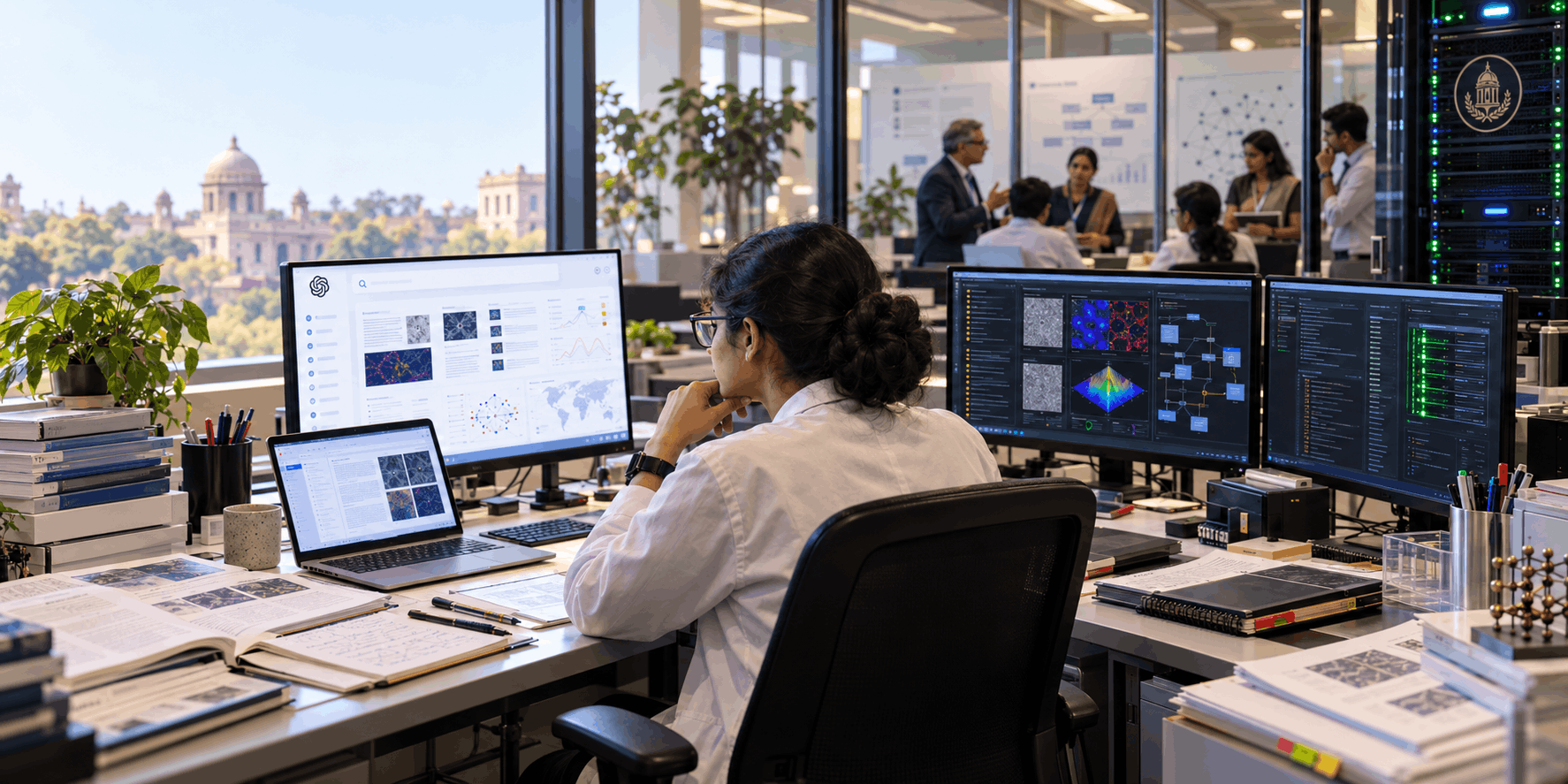
A dispute surrounding OpenAI’s recent mathematics breakthrough is putting a less-discussed AI risk under scrutiny: what happens when researchers upload unpublished work into powerful AI systems. OpenAI announced in September that an internal model had produced a claimed solution to the Navier–Stokes existence and smoothness problem, one of mathematics’ Millennium Prize Problems. The proof has triggered wider debate over AI’s role in scientific discovery, attribution and research priority.
NYU mathematician Tristan Buckmaster raised concerns because he and collaborator Levent Alpöge had been working privately on related mathematics while using Codex during their research process. Buckmaster questioned whether those sessions could have influenced OpenAI’s work. OpenAI says its researchers and agents did not access their unpublished material and, following an investigation, said Buckmaster’s Codex prompts could not have influenced its system, including through training. The episode nevertheless exposed how difficult questions of provenance become when unpublished research and frontier AI tools intersect.
Indian researchers are already responding cautiously. IIT Madras mathematics professor Arindama Singh told Inc42 that he uses AI for literature review and exploring ideas but avoids submitting complete solutions, new methods or patentable concepts. IIIT Hyderabad encourages researchers working with sensitive data to use smaller open-weight models running on institutional infrastructure, while both IIIT Hyderabad and MAHE Bengaluru are developing formal AI-use guidelines. Some academic publishers are moving further. The National Law School Journal’s 2026 AI
policy explicitly prohibits editors and peer reviewers from uploading unpublished manuscripts into AI tools and limits AI to narrow assistive uses during research and writing.
India still has no standalone AI law governing scientific research. DPIIT’s 2025 AI-copyright working paper proposes a licensing and royalty framework for copyrighted material used in AI training, but it is primarily designed around creators and commercialisation rather than disputes over scientific priority or confidential unpublished discoveries. For universities and researchers, the practical question is increasingly becoming not whether AI should be used, but which information should never leave a controlled research environment in the first place.
Filed by
Startup Unplugged
%20(1).png)
%20(1).png)