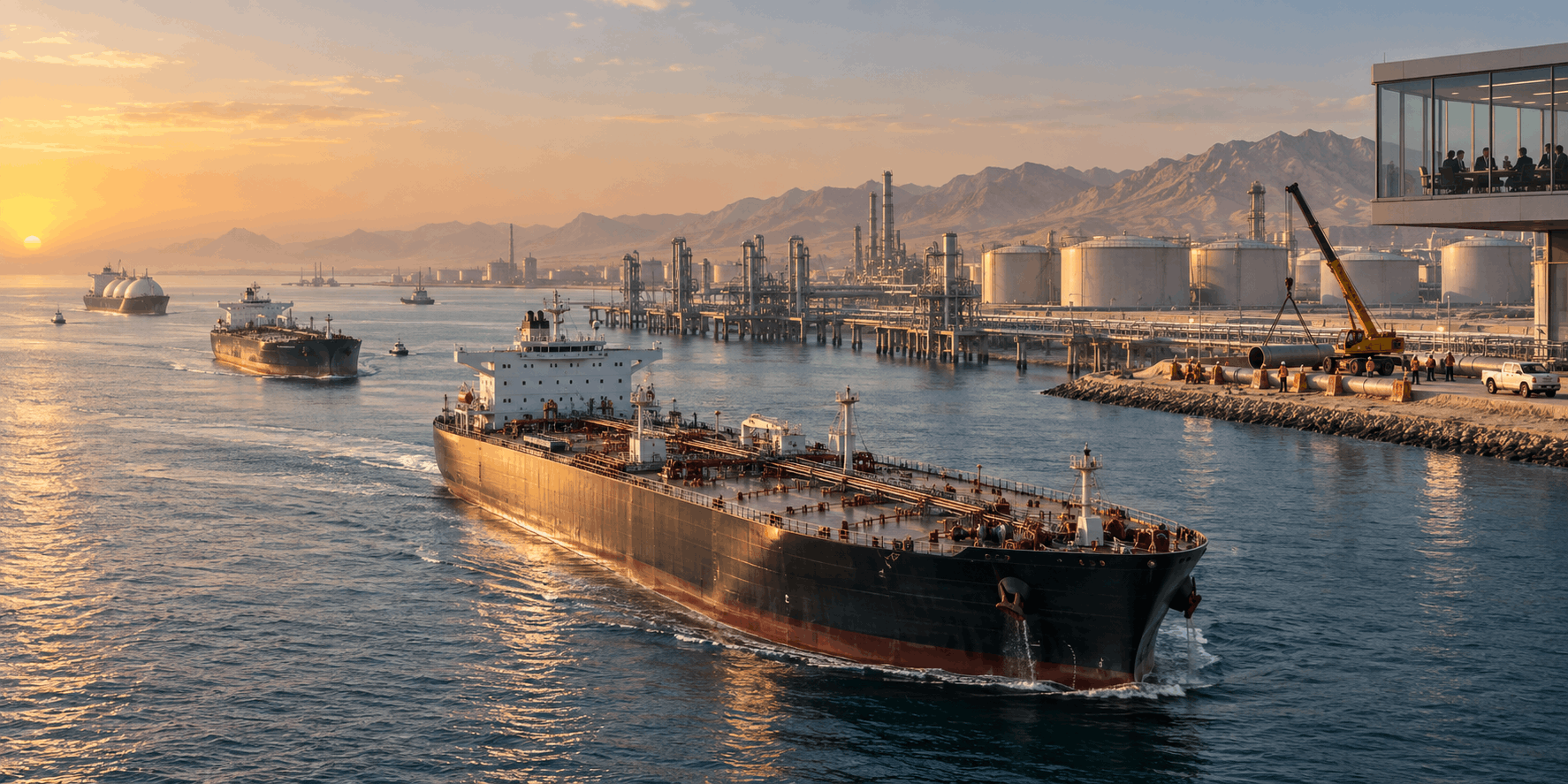
Global oil prices steadied after a three-day decline as traders weighed continuing supply risks in the Middle East against renewed diplomatic efforts around the US-Iran conflict. Brent crude was trading near $104 a barrel, while West Texas Intermediate hovered around the $100 mark, leaving prices significantly elevated by this year’s disruptions to major energy routes.
Supply concerns remain centred on two critical routes. Shipping through the Strait of Hormuz has been heavily disrupted during the conflict, although US Central Command said oil and LNG flows through the waterway recently reached a six-month high. At the same time, Saudi Arabia is still restoring its East-West pipeline after attacks damaged pumping infrastructure earlier this month.
Saudi Aramco has been redirecting more crude through its Gulf operations to compensate for interruptions on the Red Sea side. Trade sources say the company plans roughly 60 million barrels of Gulf exports across September and October through ship-to-ship transfers near Oman, helping ease some immediate supply concerns.
Diplomacy is providing a counterweight to those risks. US President Donald Trump has said he would be open to meeting Iranian President Masoud Pezeshkian around the UN General Assembly, while Qatar has continued carrying messages between the two sides.
These developments do not guarantee de-escalation, but traders are closely watching whether talks can reduce the risk to Gulf energy infrastructure and shipping.
Oil markets therefore remain caught between improving physical flows and persistent geopolitical vulnerability. The Strait of Hormuz is moving more energy than it has in months, yet
attacks on Saudi infrastructure and disruptions elsewhere—including Russian refining capacity—show how quickly the supply picture can change. For markets, the next major move may depend less on available barrels today than on whether diplomacy can reduce the risk of another major interruption.
Filed by
Startup Unplugged


%20(1)%20(1).png)