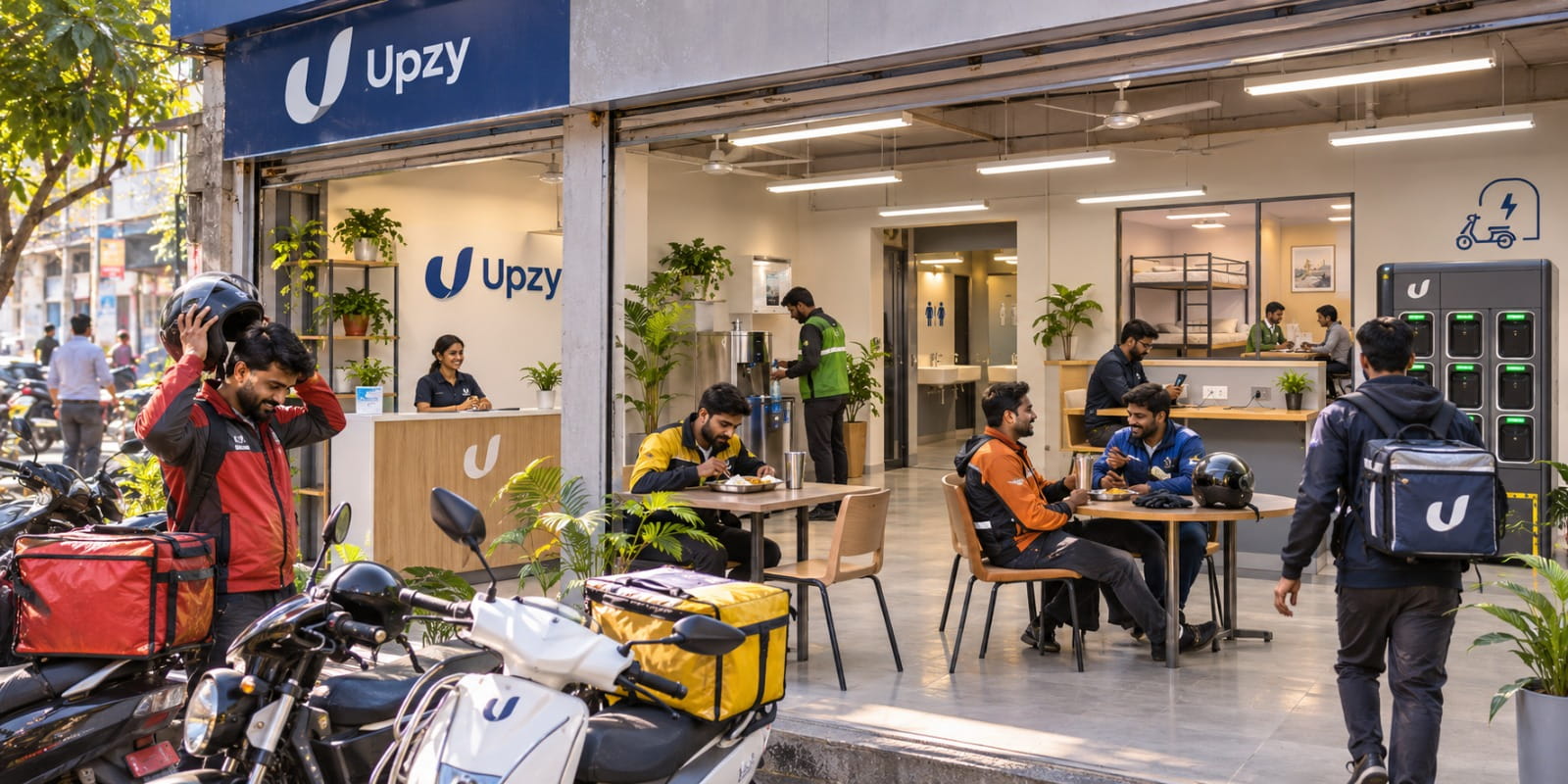
India’s delivery economy has become remarkably efficient at moving food, groceries and parcels through cities. The people carrying those orders often have far less infrastructure waiting for them between deliveries.
That gap is creating a new category of startup. Hyderabad-based Upzy opened a 9,000 sq ft worker community centre in Kondapur in October, offering washrooms, seating, a canteen, phone charging, battery swapping and workspace. Access costs ₹99 a week or ₹350 a month, with unlimited visits between 6 am and 11 pm.
The need appears basic because it is. In a survey of 4,163 food-delivery and quick-commerce riders conducted by Upzy, 91% prioritised access to a clean restroom and 88% wanted a proper place to sit and eat. Upzy plans a network of larger centres and smaller rest stops across Hyderabad before expanding to other cities.
Mumbai-based Nia.one is tackling the problem from a different direction: housing. It operates dormitory-style accommodation near employment clusters across cities including Bengaluru, Gurugram, Chennai and Pune-region Chakan. The company says it currently houses around 8,000 gig and factory workers, with rents ranging from ₹1,500 to ₹3,000 per month without deposits.
The opportunity is expanding with the workforce itself. India had around 12 million gig workers in FY25, up roughly 55% from FY21, according to the Economic Survey. NITI Aayog has projected the workforce could reach 23.5 million by 2029-30. At the same time, roughly 40% of gig workers earn below ₹15,000 per month, making affordability central to whether private rest and housing models can scale.
Platforms and governments are also building facilities, including Amazon’s nationwide Ashray rest-centre network.
The emerging business is therefore not another delivery marketplace. It is infrastructure for the hours between orders — toilets, charging, food, rest and eventually somewhere affordable to sleep.
Filed by
Startup Unplugged