Handpickd is trying to solve one of the hardest problems in online grocery: selling fresh fruits and vegetables without filling warehouses with products that can spoil before customers buy them.
The Gurugram-based startup, formerly known as Sorted, reported ₹28.6 crore in operating revenue in FY26, up 3.3X from ₹8.7 crore a year earlier. Including ₹1.2 crore in interest income, total income reached ₹29.8 crore. The figures come from annual financial statements sourced from the Registrar of Companies.
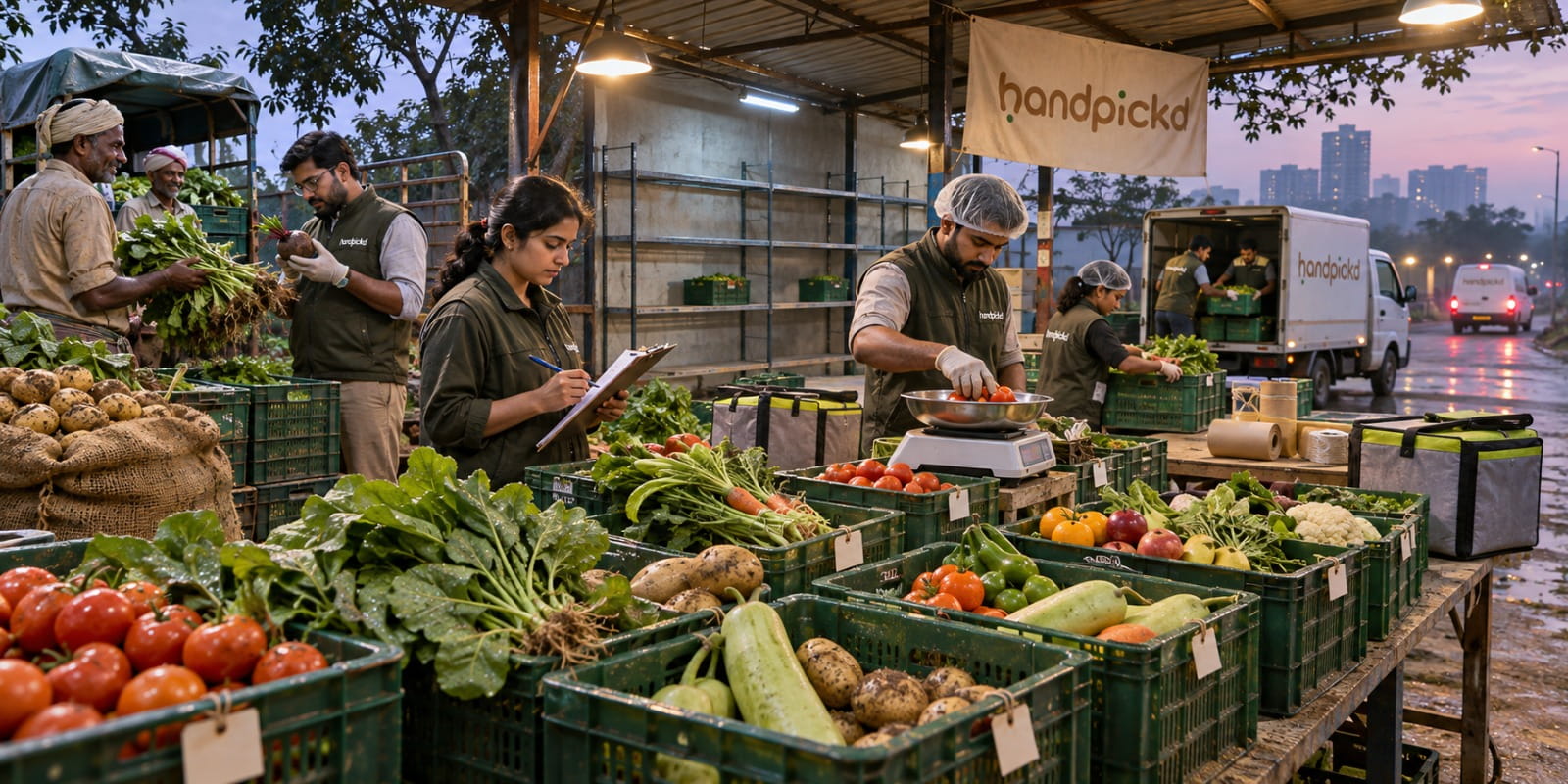
Founded in 2024 by Milkbasket cofounder Anant Goel, Nitin Gupta and Sahil Madan, Handpickd operates without conventional warehouses or dark stores. Customers place orders first; the company then procures the required quantities from farmers and delivers the produce the following morning. The model is designed to reduce inventory holding and wastage by avoiding speculative stocking.
The FY26 numbers, however, show the economic challenge underneath that approach. Handpickd spent ₹28.9 crore on material procurement, slightly more than the ₹28.6 crore it generated from product sales. Employee expenses reached ₹13 crore, while packaging and delivery added another ₹12 crore. Total expenditure climbed 3.6X to ₹72.9 crore.
As a result, net loss widened to ₹43.1 crore from ₹11.2 crore in FY25. Handpickd spent ₹2.55 for every rupee of revenue during the year, compared with ₹2.31 previously. The company also raised a $15 million Series A during FY26 as it continued expanding the model.
That puts Handpickd in a category where several well-funded companies have struggled. Otipy, Fraazo and Deep Rooted have all shut operations after raising substantial capital, underscoring how difficult fresh-produce logistics can be.
Handpickd’s inventory-free structure may remove one major source of waste, but FY26 highlights the next question: can it buy produce, deliver it fresh and still leave enough margin after every crate moves from farm to doorstep?
Filed by
Startup Unplugged