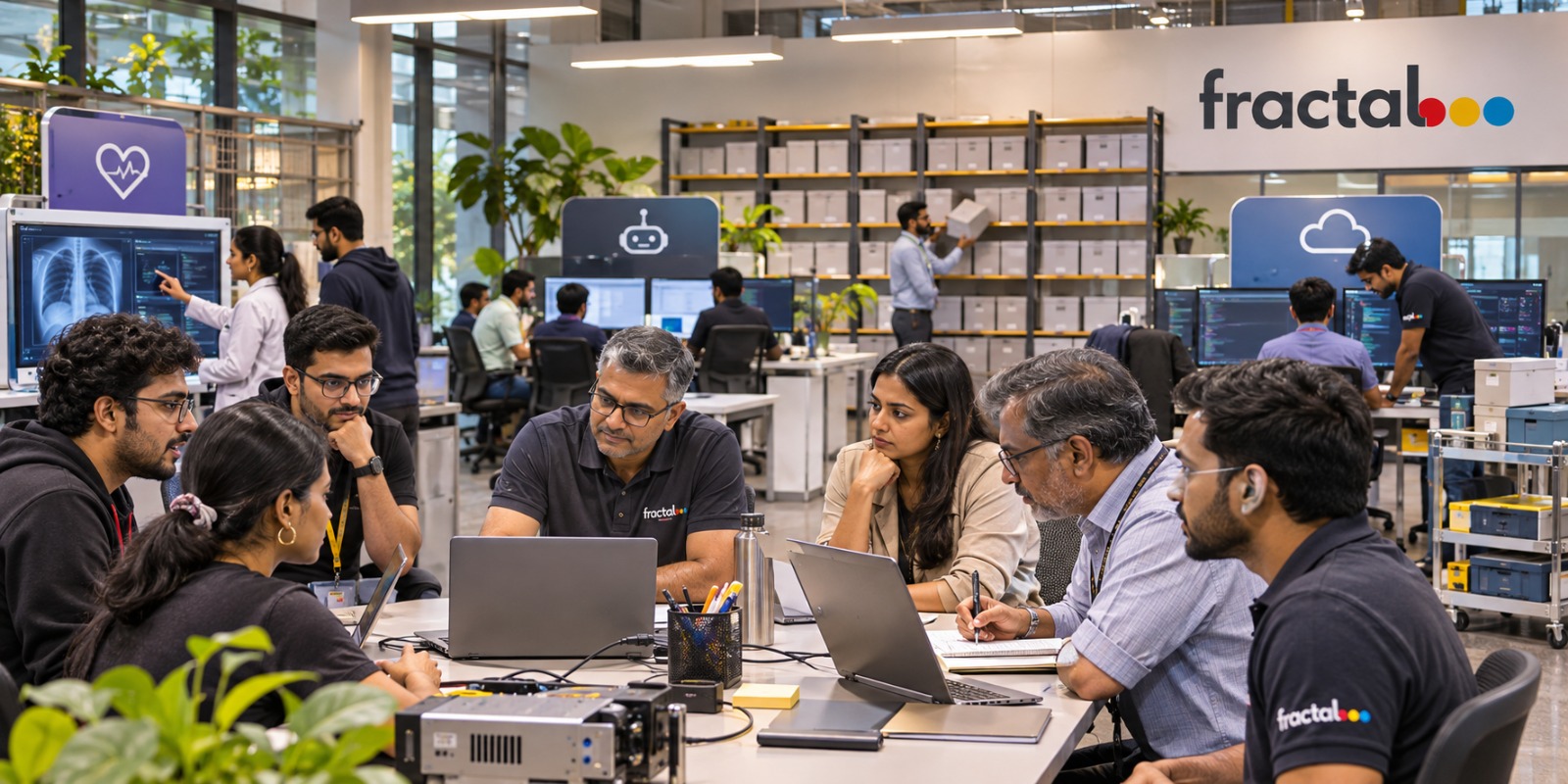
Fractal Analytics is turning acquisitions into a central part of its next growth phase. The enterprise AI company is currently in discussions with 20 to 25 startups about potential acquisitions as it looks to strengthen industry-specific capabilities, add specialised engineering talent and gain closer access to major cloud providers and frontier AI labs. CEO Srikanth Velamakanni told Reuters that acquisitions and partnerships are becoming a major growth vehicle for the company.
Fractal is particularly evaluating businesses in healthcare, agentic AI and AI engineering. The company does not have a fixed number of deals it intends to complete, but Velamakanni said its preferred spending range is roughly $50 million to $100 million, while Fractal remains open to individual acquisitions worth as much as ₹10 billion, or ₹1,000 crore.
The scale of the search is notable. Fractal reviewed around 800 potential acquisition targets over the past 12 months, meaning only a small portion have progressed into active conversations. Earlier in November, the company acquired Geneva-based analytics firm PricingOne through subsidiary Asper for 1.32 million Swiss francs, or about $1.57 million.
The strategy reflects a wider shift across technology services companies. Rather than building every AI capability internally, firms are increasingly buying specialist teams, intellectual property and customer relationships that can shorten the path into new markets. Reuters cited Crisil Ratings research showing that nearly half of M&A deals by Indian IT and technology companies over the past two fiscal years involved AI or adjacent technologies.
Fractal enters that acquisition push with significant scale of its own. It reported ₹9.57 billion in quarterly revenue and ₹812 million in profit for the quarter ended September 30. The company is also India’s first publicly listed pure-play AI company.
Velamakanni’s thesis is that AI is simultaneously becoming more capable and cheaper to use. For Fractal, that means the next competitive advantage may not come only from building another model internally — but from identifying which specialist company already owns the capability, talent or relationship it needs next.
Filed by
Startup Unplugged