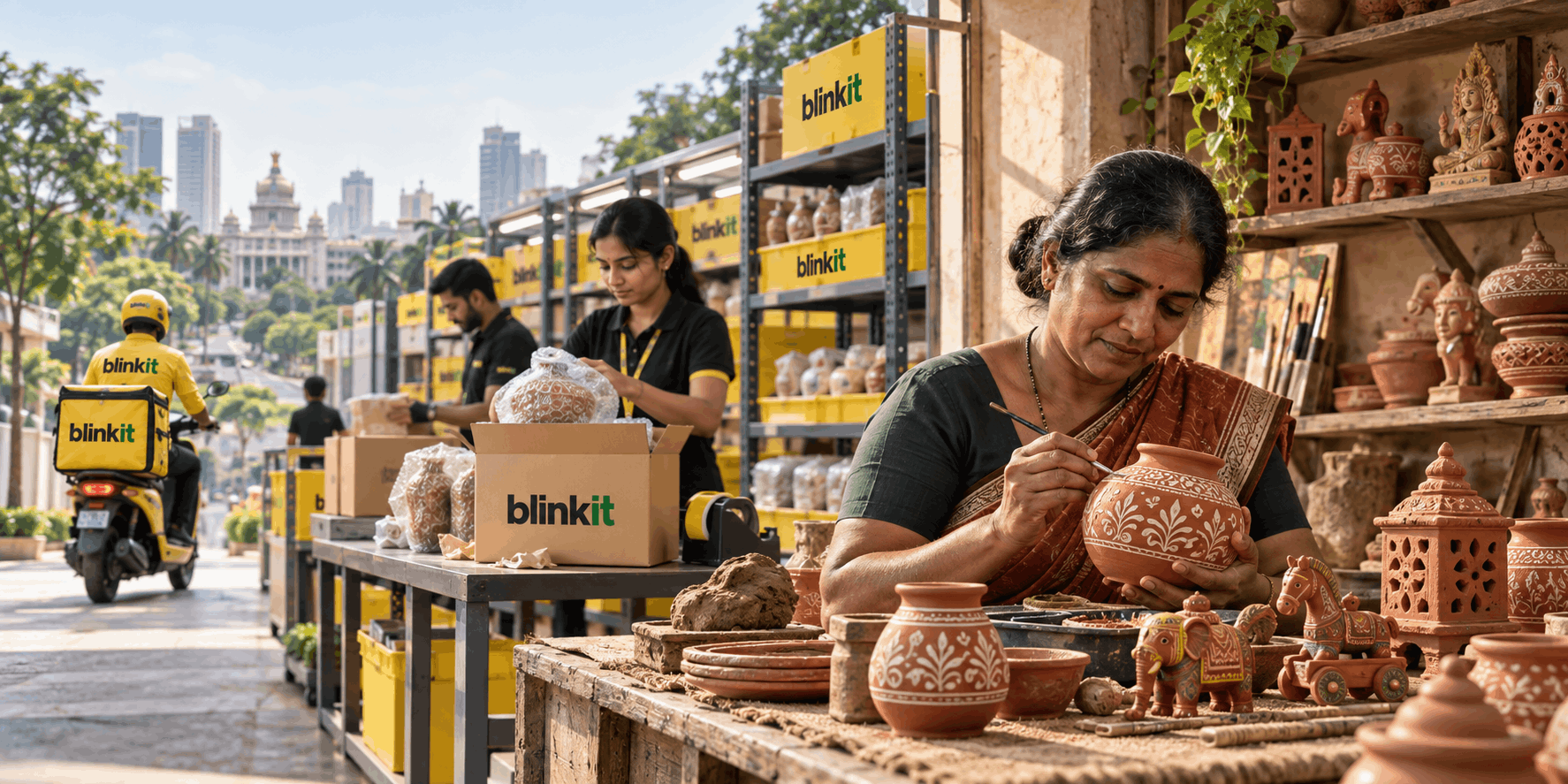
Blinkit is testing whether quick commerce can become a new sales channel for India’s traditional craftspeople. The Ministry of Micro, Small and Medium Enterprises has partnered with the platform for a Bengaluru pilot that will list pottery, dolls, toys, decorative articles and other handcrafted products sourced from artisans registered under the PM Vishwakarma scheme.
The initiative takes a model primarily associated with groceries and household essentials and applies it to handcrafted goods. According to the ministry, products will be sourced from PM Vishwakarma beneficiaries and made available to consumers through Blinkit. The government has said the pilot is intended to expand to other cities, although the duration, number of participating artisans, commercial terms and next locations have not yet been disclosed.
Market access is already an explicit component of PM Vishwakarma. The ₹13,000 crore central-sector scheme, launched in 2023, covers 18 traditional trades, including potters and traditional doll and toy makers. Its support includes skills training, toolkit incentives, credit, digital-payment incentives and marketing assistance such as branding, quality certification and links to ecommerce platforms.
The programme has reached considerable scale. Government data released around its third anniversary said 30 lakh beneficiaries had been registered, while more than 24 lakh artisans had completed basic skill training. The government has also been experimenting with other distribution channels, including GeM, ecommerce onboarding, exhibitions and dedicated retail outlets at selected railway stations.
Blinkit adds a different dimension: local, on-demand discovery. The key questions will be whether handcrafted products fit quick-commerce buying behaviour and whether artisans receive sustainable economics after packaging, inventory, commissions and fulfilment costs. Those commercial details have not yet been made public. For now, the Bengaluru pilot is best viewed as an experiment in connecting traditional production with a consumer channel built around immediacy and neighbourhood-level distribution.
Filed by
Startup Unplugged
%20(1)%20(1).png)