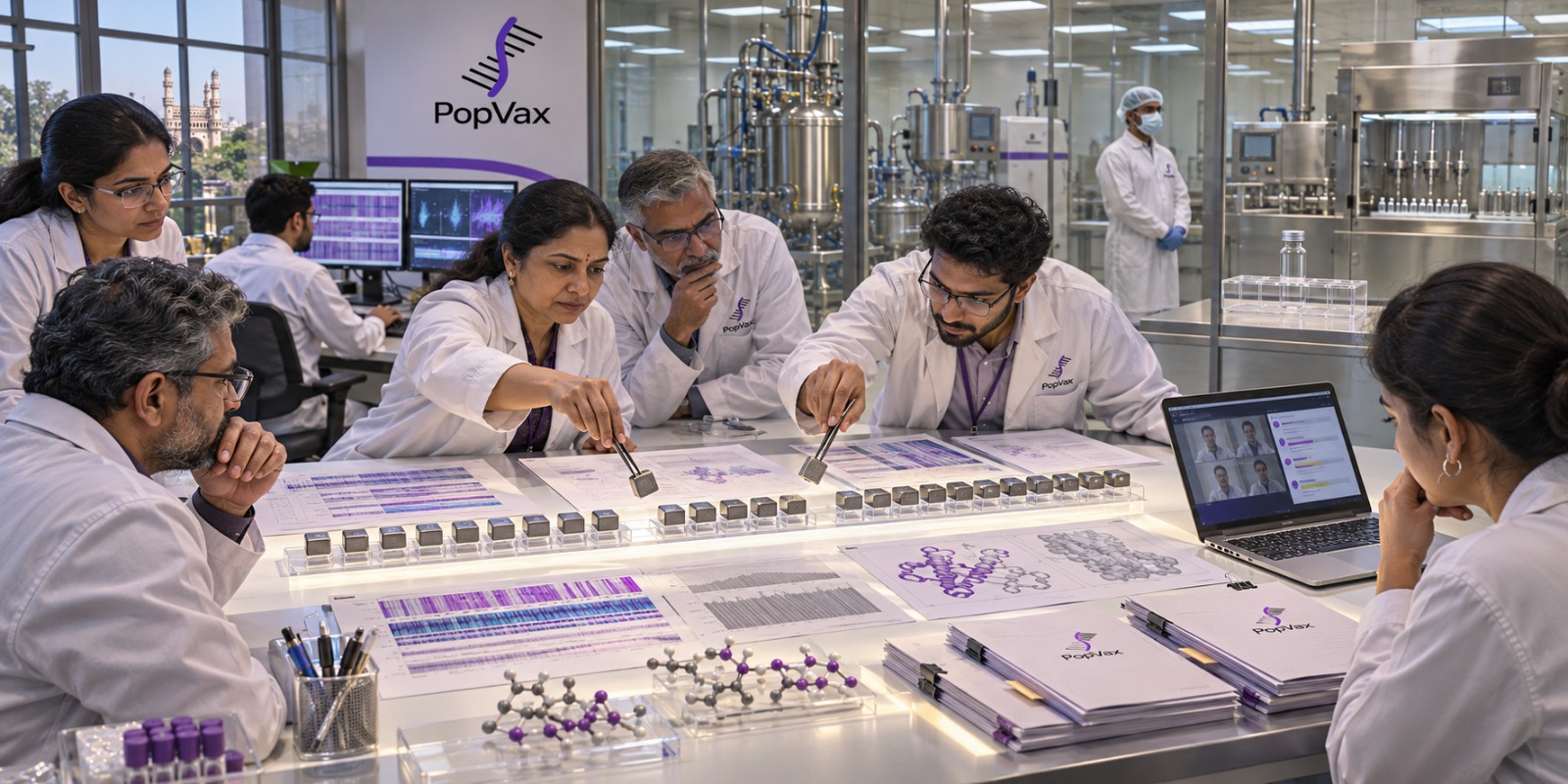
Most experimental medicines are developed behind closed doors. Hyderabad-based PopVax is trying something unusually open: publishing the data and design behind a personalised mRNA cancer vaccine before the vaccine is manufactured.
The project centres on a 34-year-old patient with pancreatic cancer. With his consent, PopVax and its RNA Foundry have released tumour DNA, tumour RNA, matched-normal DNA, design methods and code so researchers around the world can examine the proposed vaccine and suggest alternatives.
The current lead design contains 24 antigen regions selected from features of the patient’s tumour: 12 mutation-derived targets, five splice-related regions, five cancer-associated or self- antigen regions and two fusion regions. PopVax compared tumour data with normal white- blood-cell DNA and removed several candidate targets that were also detected in healthy tissue.
Researchers can reproduce parts of the design pipeline, inspect the evidence and submit alternative vaccine designs through the public repository. PopVax says it wants external specialists in cancer vaccines, antigen discovery and immunotherapy to challenge the choices before manufacturing begins at its Hyderabad RNA Foundry.
The broader concept behind personalised mRNA cancer vaccines is to identify molecular features unique to an individual tumour and encode selected targets into an mRNA vaccine intended to train the immune system to recognise cancer cells carrying them.
But the distinction between design and treatment is critical. PopVax says its personalised cancer vaccines remain experimental, with no clinical efficacy data yet. No patient had received a PopVax-manufactured personalised cancer vaccine as of the company’s latest disclosures, and the products are not approved cancer therapies.
The company does have clinical-stage experience elsewhere: its separate broadly protective COVID-19 mRNA vaccine entered a Phase I trial in Australia in August 2026. That programme, however, does not establish the safety or effectiveness of its cancer-vaccine candidates.
What makes this project notable is therefore not that PopVax has “cured” cancer. It is that a highly personalised drug-design problem is being opened to outside scientific scrutiny before the molecule is made.
Filed by
Startup Unplugged